

GDPR compliance for WordPress websites in 2026 is no longer about adding a cookie banner and forgetting about it. Regulators across the EU continue to tighten their interpretation of consent, transparency, and user control, and WordPress site owners are expected to keep up.
The regulation itself has not changed fundamentally, but the way it is enforced has. Authorities now focus less on whether a website has privacy features and more on whether they actually work as intended.
What has changed in practice
In recent years, enforcement actions increasingly target websites where consent is technically present but legally weak. Cookie banners that block content, hide the reject option, or load tracking scripts before consent are common reasons for violations. This applies equally to small WordPress blogs and large commercial sites.
At the same time, new EU policy discussions around digital services and AI are influencing how GDPR is applied. Transparency around automated data processing, analytics tools, and embedded third-party services is under closer scrutiny in 2026.
WordPress and GDPR: what core features can and cannot do
WordPress includes basic privacy tools such as data export and erasure requests, a comment cookie consent checkbox, and a privacy policy template. These features help with user rights under GDPR, but they do not control cookies, tracking scripts, or external services.
This gap is where most compliance problems appear. Analytics tools, fonts, video embeds, and advertising scripts usually require consent before loading. WordPress core does not manage this automatically.
Cookie consent expectations in 2026
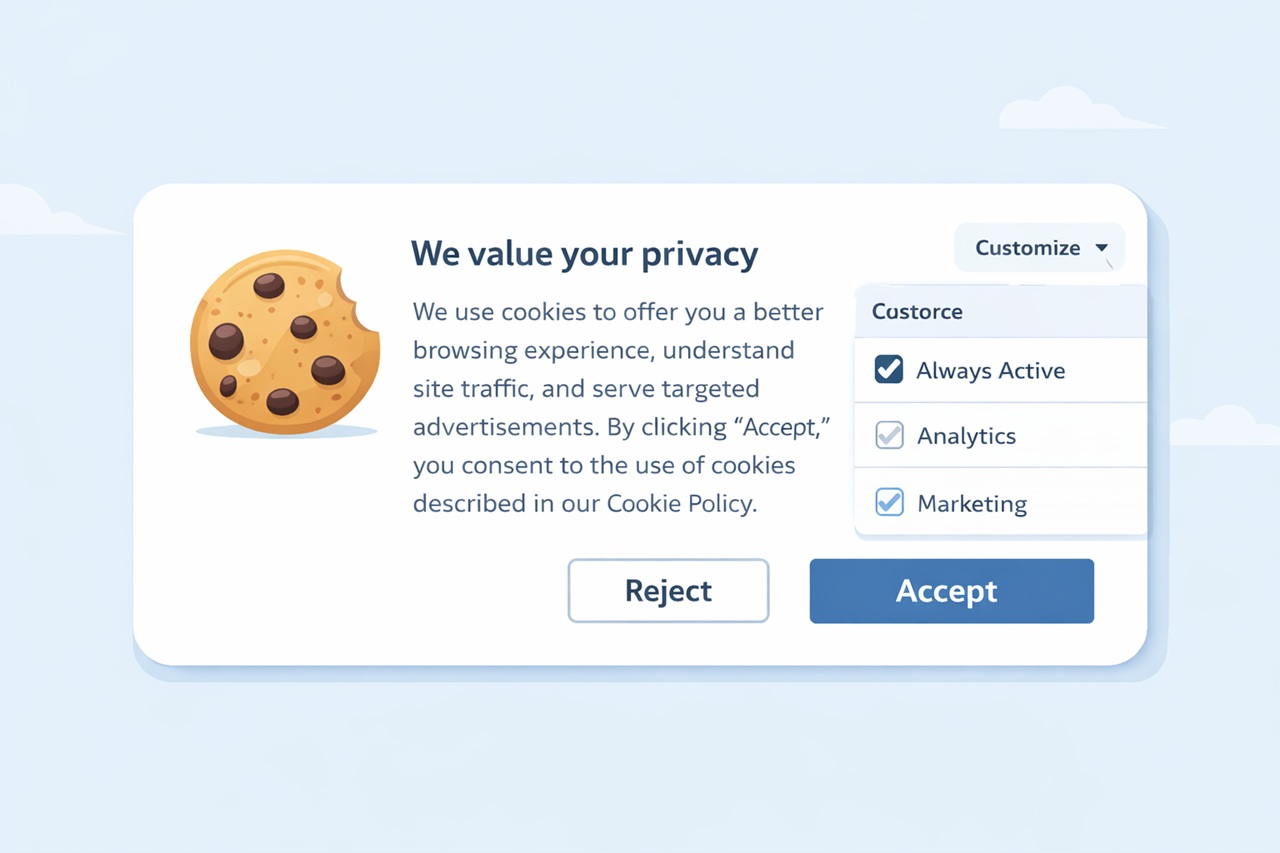
Valid consent must be freely given, informed, and revocable. In practical terms, regulators expect cookie systems to clearly explain what is being used and to respect the user’s choice in real time.
Most compliant WordPress setups rely on external consent tools to handle:
- Blocking non-essential scripts until consent is given
- Recording consent choices
- Updating cookie information when services change
Automation is more common now, but responsibility still lies with the website owner.
Accessibility is no longer optional
One of the more visible changes in 2026 is the connection between GDPR and accessibility. If a cookie banner cannot be used with a keyboard or read by assistive technologies, the consent collected through it may be considered invalid.
This links GDPR enforcement with WCAG accessibility standards. Clear language, visible controls, and usable interfaces are not just design choices anymore, but legal requirements.
What this means for WordPress site owners
GDPR compliance today is an ongoing maintenance task. A compliant setup needs regular review, especially when new plugins, analytics tools, or embedded services are added. Relying solely on WordPress core features is not enough, but blindly installing plugins without configuration is also risky.
The main expectation in 2026 is simple: users must understand what data is being processed and must be able to say no without friction.