

If you run a WordPress website in 2026, you have probably noticed a massive shift in how site owners handle visitor data. For years, Google Analytics was the default choice for tracking traffic. You simply pasted a tracking code into your header and forgot about it.
Today, that “set it and forget it” approach is a massive liability. Website owners are ditching Google Analytics 4 (GA4) in record numbers. The reasons are simple: GA4 is incredibly complex for everyday users, it forces you to display annoying cookie consent banners, and its legal foundation in the EU remains shaky at best.
Fortunately, the market has responded. There is now a thriving ecosystem of privacy-first analytics tools that give you the insights you need without spying on your visitors or requiring a law degree to configure. In this guide, we will break down the legal reality of GA4 in 2026 and compare the best privacy-focused Google Analytics alternatives for your WordPress site.
Can you still use Google Analytics 4 legally in the EU in 2026?
The short answer is yes, GA4 is conditionally legal in most EU countries as of mid-2026. However, it is absolutely not GDPR-compliant out of the box. Using it legally requires strict adherence to both the GDPR and the ePrivacy Directive.
To understand where we are today, we have to look at the turbulent legal history of Google Analytics in Europe.
The Data Transfer Saga and the DPF
Between 2022 and January 2025, several European Data Protection Authorities (DPAs) – including those in Austria, France, Italy, Denmark, and Norway – ruled that using Google Analytics was unlawful. The core issue was that Google transferred EU citizen data to the US, where it could theoretically be accessed by US intelligence agencies without adequate privacy protections.
This specific data transfer issue was largely resolved on July 10, 2023, when the European Commission adopted the EU-US Data Privacy Framework (DPF). Google LLC self-certified under this framework, providing a legal mechanism for the transatlantic data transfers.
2026 Legal Warning: The DPF is Under Threat
While the DPF currently protects GA4 data transfers, its legal durability is highly uncertain. A September 2025 ruling upheld the DPF, but that decision was appealed to the Court of Justice on October 31, 2025 (case C-703/25 P), and the appeal is currently live.
Furthermore, a bombshell US Supreme Court ruling on June 29, 2026 (Trump v. Slaughter) ruled that statutory restrictions on the President’s power to remove Federal Trade Commission (FTC) Commissioners are unconstitutional. Because the FTC’s independence is a central enforcement pillar of the DPF, privacy groups like noyb are now arguing the framework’s legal basis is invalid. Organizations using GA4 are strongly advised to document their reliance on the DPF and prepare contingency plans.
The Unavoidable Hurdle: Cookie Consent
Even if the data transfer issues are completely ignored, you still face a massive hurdle: the ePrivacy Directive (often called the “Cookie Law”).
GA4 relies on non-essential cookies (specifically _ga and _gid) to track users. Under Article 5(3) of the ePrivacy Directive, you must obtain prior, explicit, opt-in consent before these cookies touch a visitor’s device. Analytics are not considered “strictly necessary” for a website to function, meaning you cannot rely on “legitimate interest” as a lawful basis for tracking EU visitors.
To use GA4 compliantly in 2026, you must implement a strict GDPR cookie consent system. GA4 must be entirely blocked from loading until the user clicks “Accept.” You must also implement Google Consent Mode v2 (a commercial requirement from Google for EEA/UK advertisers since March 2024), sign Google’s Data Processing Terms, and configure GA4 to retain data for the shortest possible period (usually 2 months).
What makes an analytics tool “Privacy-Friendly”?
Given the massive compliance headache of GA4, many WordPress site owners are moving to privacy-friendly alternatives. But what exactly makes an analytics tool friendly to privacy and the GDPR?
- Cookieless Tracking: The best tools do not use cookies, local storage, or persistent identifiers. Instead, they use temporary hashes (often based on IP and user agent) that are rotated daily. Because they do not store data on the user’s device, they generally do not require a cookie consent banner under the ePrivacy Directive.
- No Personally Identifiable Information (PII): Privacy-first tools aggregate data. They tell you that 100 people visited a page, but they do not track what “John Doe” did across your site over the last month.
- EU Data Residency: To avoid the messy EU-US data transfer legal battles entirely, privacy-friendly tools either let you host the data yourself or use GDPR compliant hosting located strictly within the European Union.
- Data Ownership: You own your data. The analytics provider does not sell your traffic data to third parties or use it to build advertising profiles.
Comparison of the Best GA4 Alternatives in 2026
Here is a quick overview of the top privacy-focused analytics tools available for WordPress users today.
| Tool | Hosting / Data Residency | Cookieless? | Consent Banner Needed? | Pricing Start | Open Source? |
|---|---|---|---|---|---|
| Plausible | EU (Germany) | Yes (Default) | No | €9 / month | Yes |
| Fathom | EU Isolation available | Yes (Default) | No | $14 / month | No |
| Matomo | Self-hosted or EU Cloud | Optional | Depends on config | Free (Self) / €29/mo (Cloud) | Yes (Core) |
| Simple Analytics | EU (Netherlands) | Yes (Default) | No | €9 / month | Yes (Script only) |
| Umami | Self-hosted or Cloud | Yes (Default) | No | Free (Self) / ~$9/mo (Cloud) | Yes |
| Independent Analytics | Your WP Server | Yes (Default) | No | Free / $59/year (Pro) | Yes (Core) |
| Piwik PRO | EU (Germany, NL, Poland) | Optional | Usually Yes | Free Tier / Custom Enterprise | No |
Let’s dive into the specifics of each tool to help you find the perfect fit for your WordPress website.
1. Plausible Analytics Recommended
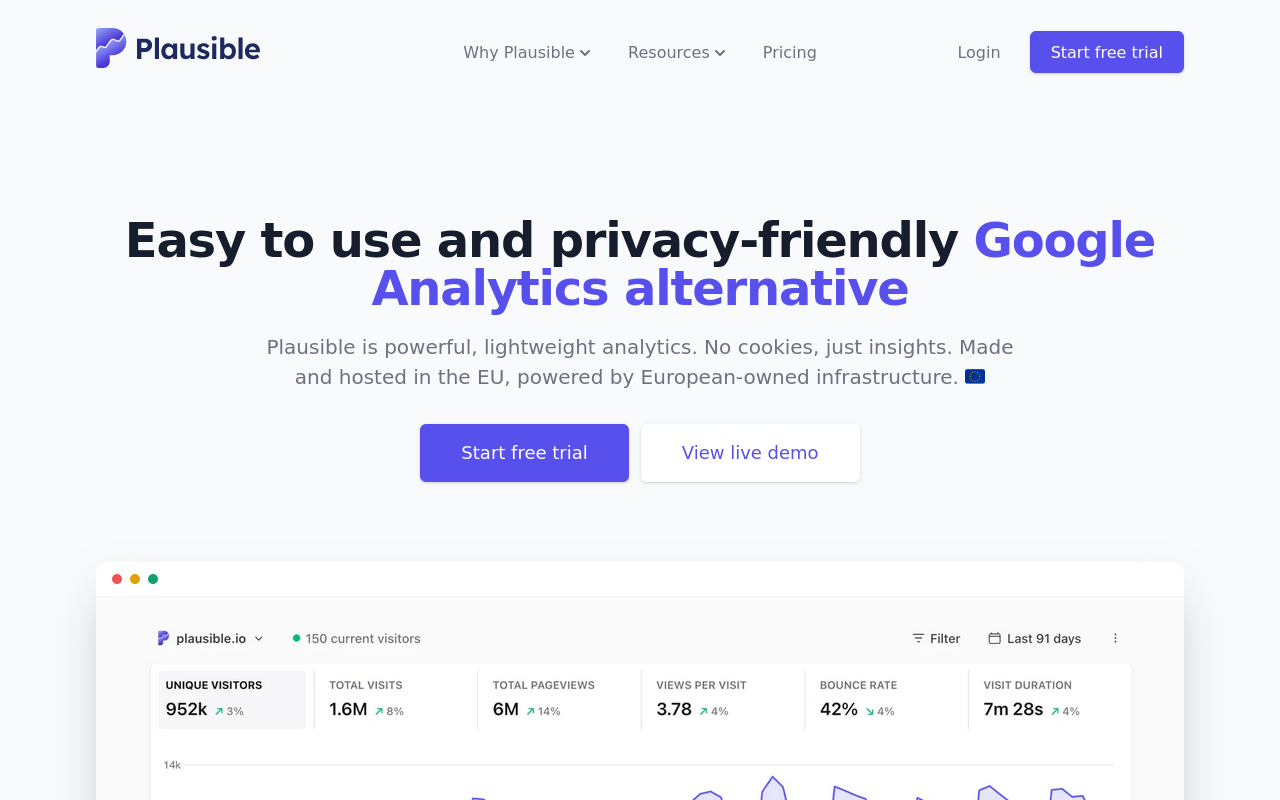
Plausible Analytics has become the gold standard for site owners looking to escape Google Analytics. It is an open-source project built strictly around privacy and simplicity. The dashboard is clean, loads instantly, and gives you all the essential metrics (visitors, referrers, pageviews) on a single page.
Privacy & GDPR Posture
Plausible is entirely cookieless by default. It generates a unique identifier from the visitor’s IP address and user agent, which is hashed and rotated daily. This makes it impossible to track individuals across days or across different websites. Because it collects no personal data and uses no cookies, you generally do not need a consent banner to use Plausible. All data is hosted securely in Germany.
Pricing & WordPress Integration
There is no free tier, but pricing is very reasonable based on pageviews. Plans start at €9/month (or €90/year) for up to 10,000 pageviews, scaling up to €19/month for 100,000 pageviews. They offer an official WordPress plugin that makes integration a one-click process.
Pros
- No cookie consent banner required.
- 100% EU data residency (Germany).
- Fully open-source transparency.
- Extremely lightweight script (under 1KB) won’t slow down your site.
Cons
- No free tier available.
- Metrics are intentionally basic – power users might miss deep funnel analysis.
2. Fathom Analytics
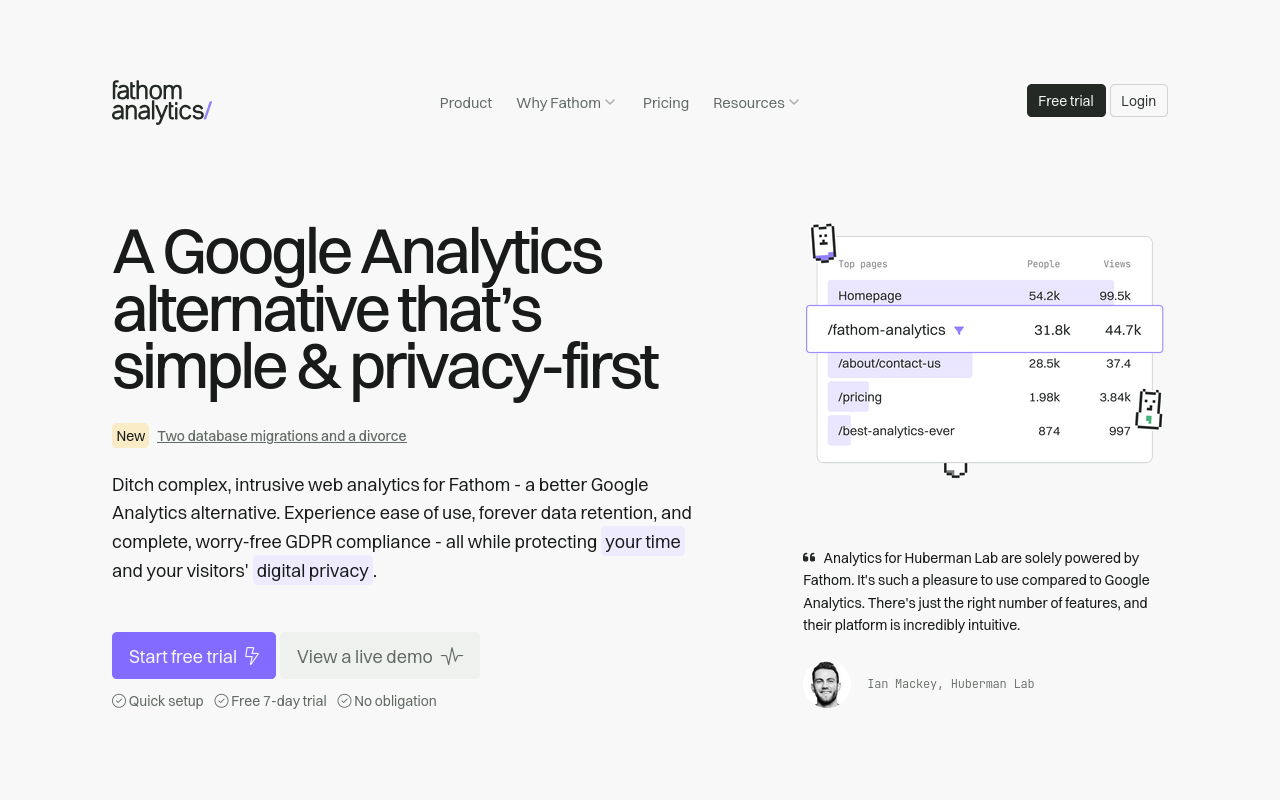
Fathom Analytics is one of the pioneers of the privacy-first analytics movement. Like Plausible, it focuses on providing a beautiful, single-page dashboard that is easy to read at a glance. Fathom places a massive emphasis on website speed and bypassing ad-blockers legally.
Privacy & GDPR Posture
Fathom uses a privacy-by-design approach that is completely cookieless. It avoids storing IP addresses or any persistent identifiers. For European users, Fathom offers “EU isolation,” meaning data for EU customers is processed and stored entirely within the European Union. A consent banner is generally not needed.
Pricing & WordPress Integration
Fathom does not offer a free tier. Pricing starts at $14/month (or $140/year) for up to 100,000 pageviews across all your sites. They have a dedicated, official WordPress plugin for fast setup.
Pros
- No cookie consent banner required.
- Generous pageview limits on the starter plan (100k).
- EU isolation routing ensures compliance.
Cons
- Not open source.
- Slightly more expensive entry price compared to Plausible.
3. Matomo
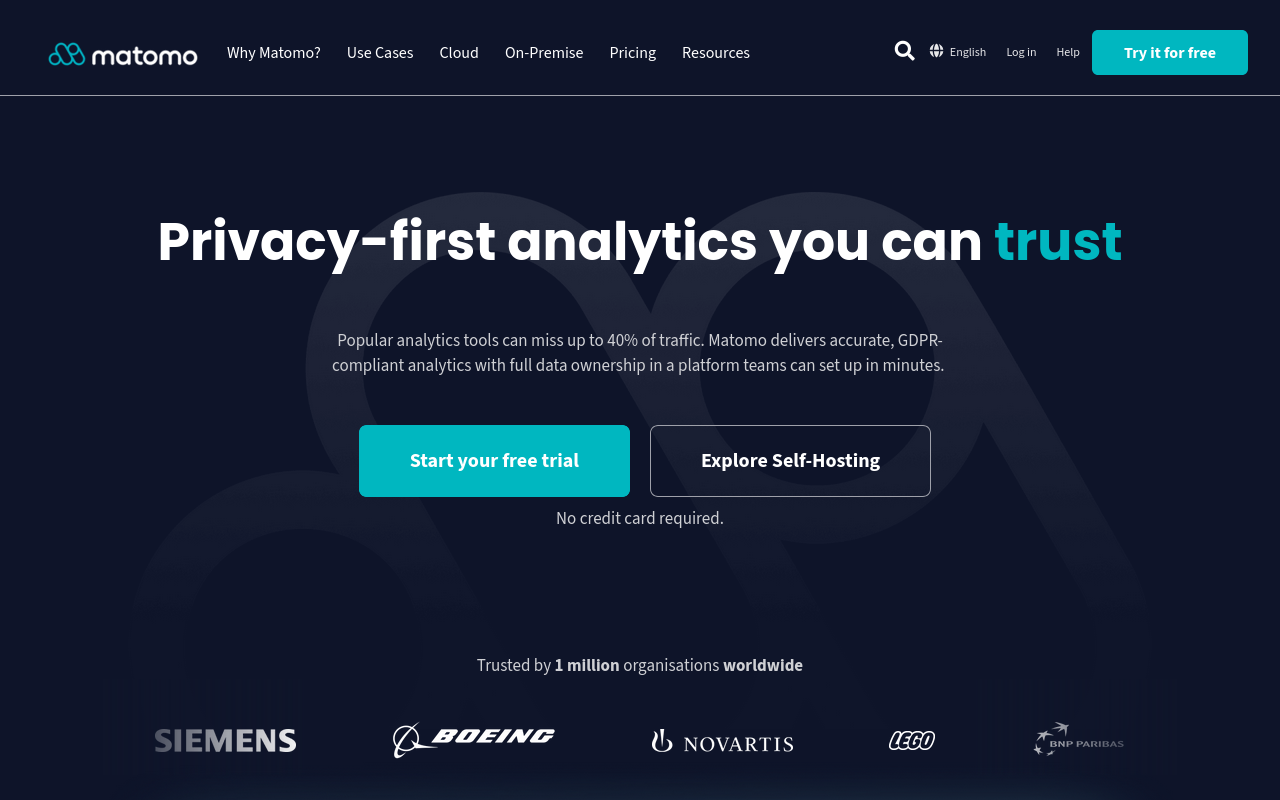
If you need the deep, granular data that Google Analytics provides but want to retain data ownership, Matomo is the answer. Formerly known as Piwik, Matomo is a powerhouse analytics platform. Collecting GDPR-friendly analytics data is highly customizable with Matomo, making it a favorite for larger businesses.
Privacy & GDPR Posture
Matomo’s privacy posture depends on how you configure it. By default, it uses first-party cookies. However, it fully supports cookieless tracking using anonymized device fingerprinting. If you configure it for cookieless tracking, implement full IP anonymization, and host it within the EU, you generally do not need a consent banner. If you use the default cookie settings, a banner is required.
Pricing & WordPress Integration
Matomo offers two paths. You can self-host the open-source core for free on your own server (though premium add-ons like Heatmaps cost around €199/year). Alternatively, Matomo Cloud offers managed hosting starting at €29/month for up to 50,000 hits, with data hosted in Germany. They have a highly popular official WordPress plugin that even allows you to run Matomo directly inside your WP dashboard.
Pros
- Feature-rich: comparable to GA4 in depth (e-commerce, funnels, heatmaps).
- Free to self-host and own 100% of your data.
- Cloud version guarantees EU data residency.
Cons
- Steeper learning curve than Plausible or Fathom.
- Cloud pricing scales up quickly for high-traffic sites.
- Requires careful configuration to avoid needing a consent banner.
4. Simple Analytics
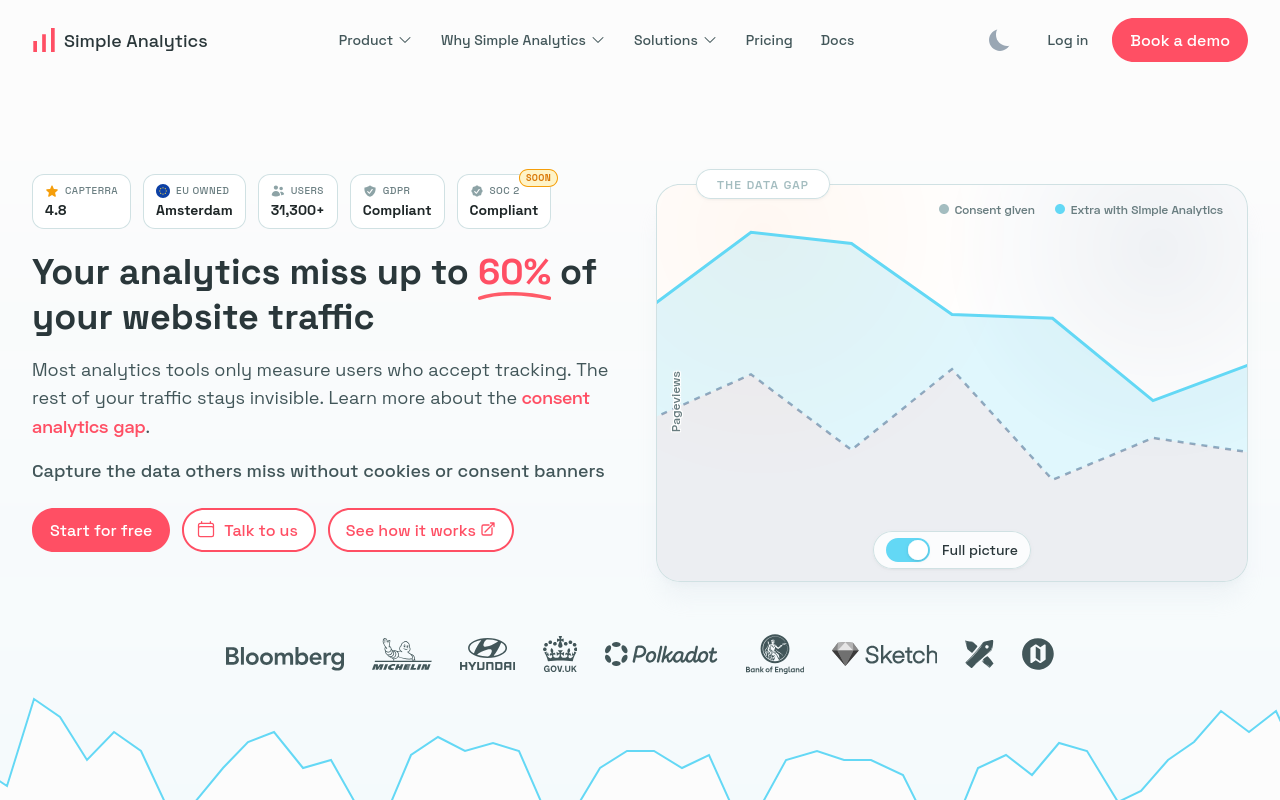
True to its name, Simple Analytics strips away all the noise. It is designed for website owners who just want to know how many people visited, where they came from, and what pages they looked at, without any tracking baggage.
Privacy & GDPR Posture
Simple Analytics is entirely cookieless. It does not use cookies, local storage, or persistent identifiers of any kind. It relies on a combination of the referrer, user agent, and screen size to generate a temporary hash for unique visitor counting within a 24-hour window. The hash is then discarded. All data is hosted in the Netherlands, and no consent banner is needed.
Pricing & WordPress Integration
Pricing starts at €9/month (or €96/year) for up to 100,000 data points (pageviews/events). They provide an official WordPress plugin for smooth integration. While their tracking script is open source, the backend application is proprietary.
Pros
- Extremely strict privacy model (no persistent identifiers at all).
- No consent banner required.
- Data hosted entirely in the Netherlands.
Cons
- Backend is not open source.
- Pricing is based on “data points” (including events), which can add up faster than pure pageviews.
5. Umami
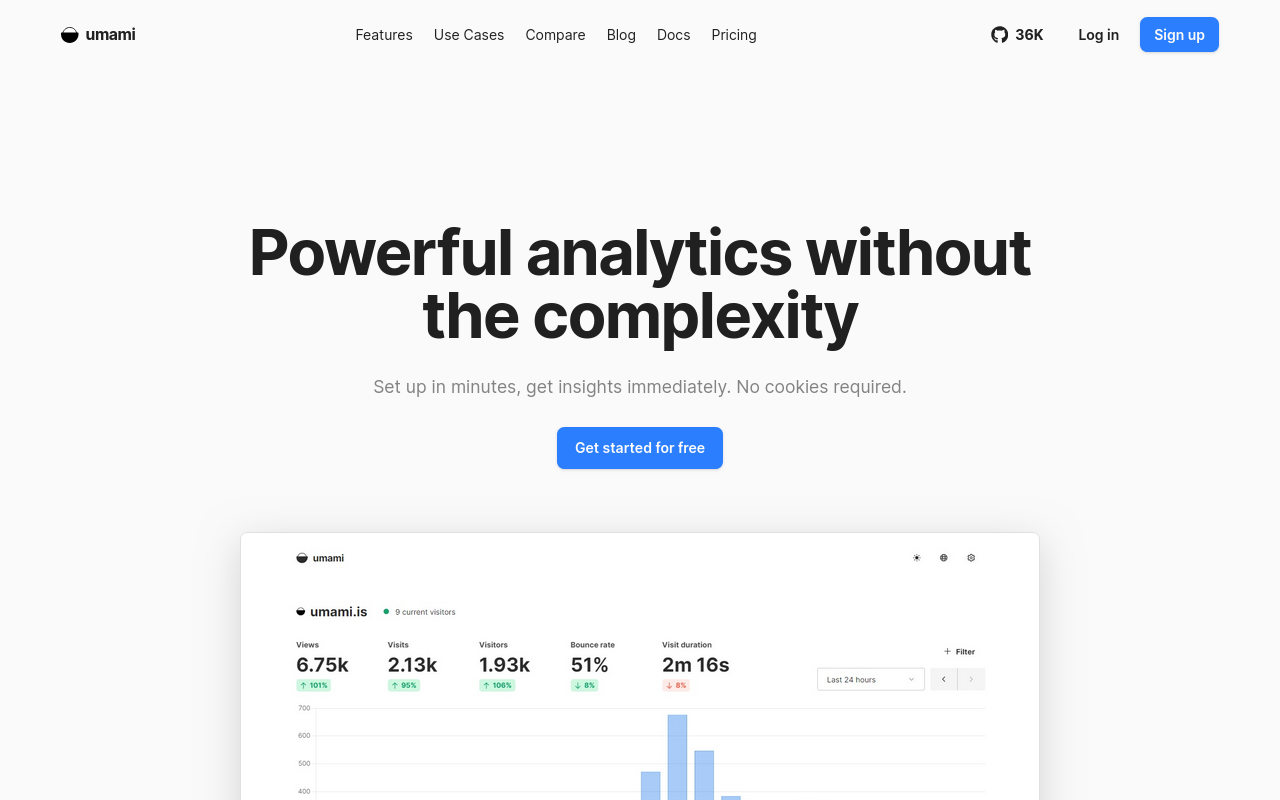
Umami is a fantastic open-source alternative that has gained massive popularity among developers and tech-savvy site owners. It offers a beautiful, fast interface and robust event tracking capabilities.
Privacy & GDPR Posture
Umami is cookieless by default and does not collect any personally identifiable information. It generates a unique identifier based on anonymized data (like IP and user agent) which is hashed and not stored persistently. Because of this privacy-focused design, a consent banner is generally not required.
Pricing & WordPress Integration
The core software is completely free and open source to self-host. If you prefer managed hosting (“Umami Cloud” via third-party providers), expect plans to start around $9 to $20 per month depending on the host. Several third-party WordPress plugins exist to easily add the Umami tracking script to your site.
Pros
- 100% free if you self-host.
- Fully open source.
- No consent banner required.
- Excellent event tracking capabilities.
Cons
- Self-hosting requires technical knowledge.
- Cloud pricing and EU residency depend entirely on which third-party host you choose.
6. Independent Analytics
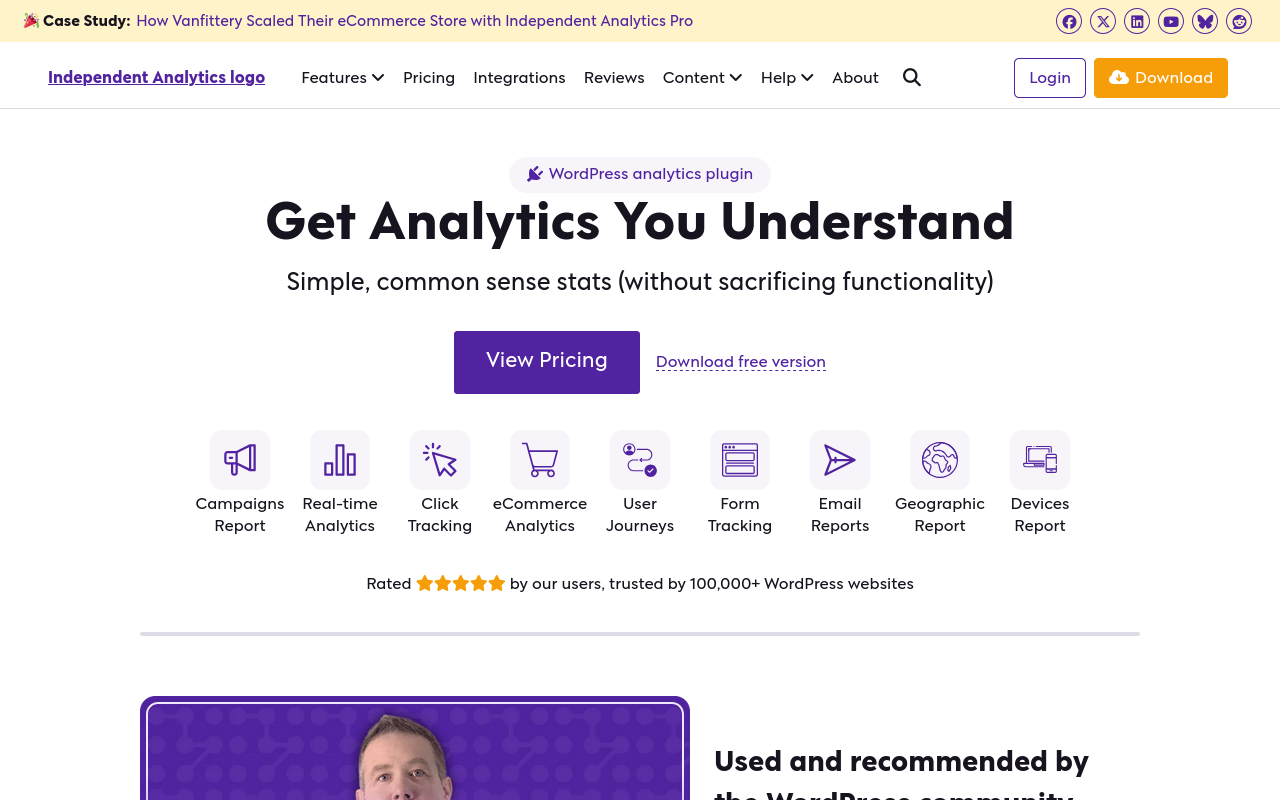
Independent Analytics takes a completely different approach: it is a native WordPress plugin. Instead of sending your data to a third-party server, it processes and stores all analytics data directly inside your own WordPress database.
Privacy & GDPR Posture
Because the data never leaves your server, your data residency is exactly where your website is hosted. If your WordPress host is in the EU, your analytics data is in the EU. It is cookieless by default, using a temporary, non-identifiable session ID for real-time tracking that is not stored persistently. No consent banner is needed.
Pricing & WordPress Integration
As a native plugin, integration is flawless. The core version is available for free on the WordPress.org repository. The Pro version, which adds advanced reporting features, costs $59/year for a single site.
Pros
- Data never leaves your WordPress server.
- Generous free version available.
- No consent banner required.
- Seamless integration with WordPress posts and pages.
Cons
- Stores data in your WP database, which could impact server performance on very high-traffic sites.
- Pro features are proprietary, though the core is open source.
7. Piwik PRO
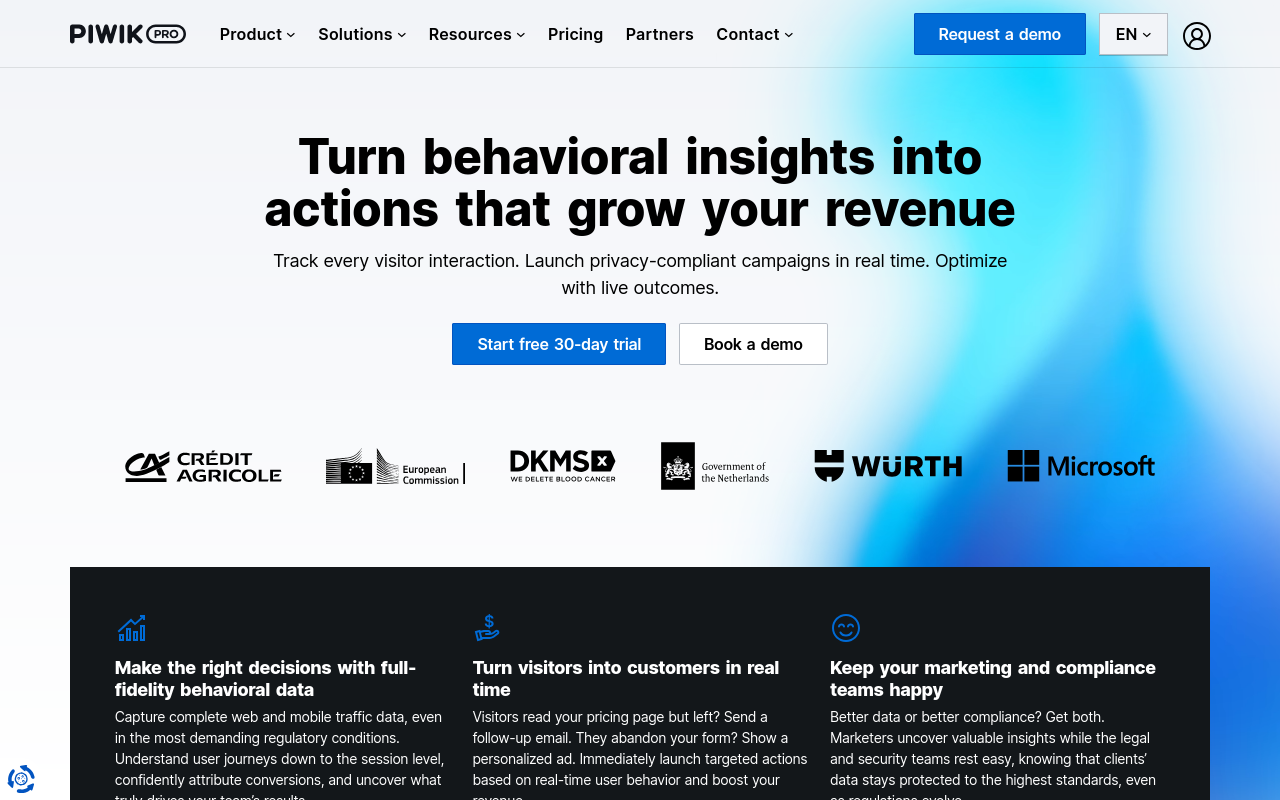
Piwik PRO is an enterprise-grade analytics suite. While it shares a historical lineage with Matomo (formerly Piwik), it is a separate, commercial product built for larger organizations that require strict compliance tools alongside deep marketing integrations.
Privacy & GDPR Posture
Piwik PRO offers both cookie-based and cookieless tracking. Its standout feature is its built-in Consent Manager. If you use cookies, Piwik PRO handles the consent banner seamlessly. If configured strictly for cookieless tracking with full IP anonymization, a banner may not be needed. All data is hosted securely in the EU (Germany, Netherlands, or Poland).
Pricing & WordPress Integration
They offer a very generous “Core” Free Plan that allows up to 500,000 hits per month, though data retention is limited to 14 months. The Enterprise plan features custom pricing based on traffic and required features (like their Customer Data Platform). They provide an official WordPress plugin.
Pros
- Excellent Free plan for up to 500k hits/month.
- Built-in Consent Manager and Tag Manager.
- Enterprise-grade compliance and security features.
- Guaranteed EU data hosting.
Cons
- Not open source.
- Interface is complex and geared toward marketing professionals.
- Usually requires a consent banner unless strictly configured.
Buying Advice: Which Tool is Right for You?
Choosing the right analytics tool depends heavily on your specific needs and technical comfort level.
For Bloggers and Small Sites
If you run a standard WordPress blog and want to keep costs down, Independent Analytics is a brilliant choice. It runs entirely within your WordPress dashboard and has a great free version. If you prefer a hosted solution to keep server load down, Fathom or Plausible are excellent, hassle-free options.
For WooCommerce Stores
E-commerce requires reliable tracking for conversions. Plausible handles basic conversion tracking beautifully without cookies. However, if you need deep funnel analysis and detailed customer journey tracking, Matomo is the closest match to GA4’s capabilities. Be sure to check our guide on GDPR plugins for WooCommerce to ensure your entire checkout flow is compliant.
For Agencies
If you manage multiple client websites, Fathom Analytics is highly recommended. Their pricing is based on total pageviews across all sites, making it very cost-effective for agencies. Simple Analytics is also a strong contender for clients who demand the strictest privacy standards.
For Enterprise and Compliance-Heavy Sites
If you work in finance, healthcare, or government, you need an ironclad compliance trail. Piwik PRO and Matomo Cloud are the industry leaders here. Piwik PRO’s integrated consent manager is particularly useful if your marketing team still insists on using some tracking cookies.
Important: You Still Need a Privacy Policy!
Even if you choose a 100% cookieless tool that doesn’t require a consent banner, the GDPR still requires transparency. You must disclose that you are collecting aggregated analytics data, explain what tool you are using, and state where the data is hosted. Read our full guide on creating a GDPR-compliant privacy policy for WordPress to make sure your legal pages are up to date.
Frequently Asked Questions
Do I need a cookie banner for cookieless analytics?
Generally, no. The ePrivacy Directive requires consent for storing or accessing information on a user’s device (like cookies). If an analytics tool does not use cookies, local storage, or persistent identifiers, and does not collect personal data, you usually do not need a consent banner.
Is Google Analytics 4 illegal in Europe?
As of mid-2026, GA4 is not strictly illegal, but it is conditionally legal. You can use it if you rely on the EU-US Data Privacy Framework for data transfers and strictly enforce prior, opt-in consent for its cookies. However, ongoing legal challenges (like the appeal in case C-703/25 P and the fallout from the June 2026 Trump v. Slaughter ruling) mean its legal status remains precarious.
What is the EU-US Data Privacy Framework (DPF)?
The DPF is an agreement adopted in July 2023 between the European Commission and the US. It provides a legal mechanism for companies (like Google) to transfer EU citizens’ personal data to the US, provided the US companies self-certify to certain privacy standards. It replaced the invalidated Privacy Shield.
Can I use “legitimate interest” for Google Analytics tracking?
No. Because GA4 uses non-essential cookies to track user behavior, European regulators have made it clear that analytics do not fall under the “strictly necessary” exemption. Therefore, you cannot use legitimate interest; you must obtain explicit user consent.
Key Takeaway
The legal landscape for Google Analytics 4 in 2026 is complex, risky, and requires annoying consent banners that ruin the user experience. By switching to a privacy-first alternative like Plausible, Fathom, or Matomo, you can ditch the cookie banner, respect your visitors’ privacy, and still get the essential traffic insights you need to grow your WordPress website.